
How to Keep Your Dog Visible on Dark Winter Walks
Once the clocks go back, a lot of walks happen in the dark, before work or after it, and a dog that is easy to see in daylight can be almost invisible to a driver at dusk. Keeping your dog visible on dark winter walks is one of the simplest ways to keep them safe, and this guide covers the gear and the habits that help you both be seen.
Why visibility matters more in winter
In the depths of winter, both ends of the day are dark, so the morning and evening walks that make up most people's routines happen in low light. Dogs are naturally hard to spot in these conditions. Many have dark coats that blend into hedgerows and verges, they sit low to the ground below a driver's eyeline, and they can move quickly and unpredictably towards a road. Add rain, fog or the glare of oncoming headlights and a driver may have only a moment to react. Making your dog easy to see gives everyone more time, and time is what prevents accidents.
How reflective gear actually works
It helps to understand the difference between reflective and simply light-coloured gear. Reflective materials bounce light back towards its source, so when a car's headlights hit a reflective harness or leash, the light returns to the driver and your dog appears to light up from a distance. A pale or bright coat helps a little in dusk, but it does nothing once it is truly dark, whereas reflective trim keeps working as long as there is a light source pointed your way. This is why the reflective detailing built into good winter gear matters so much on roads and paths after dark.
Reflective harnesses
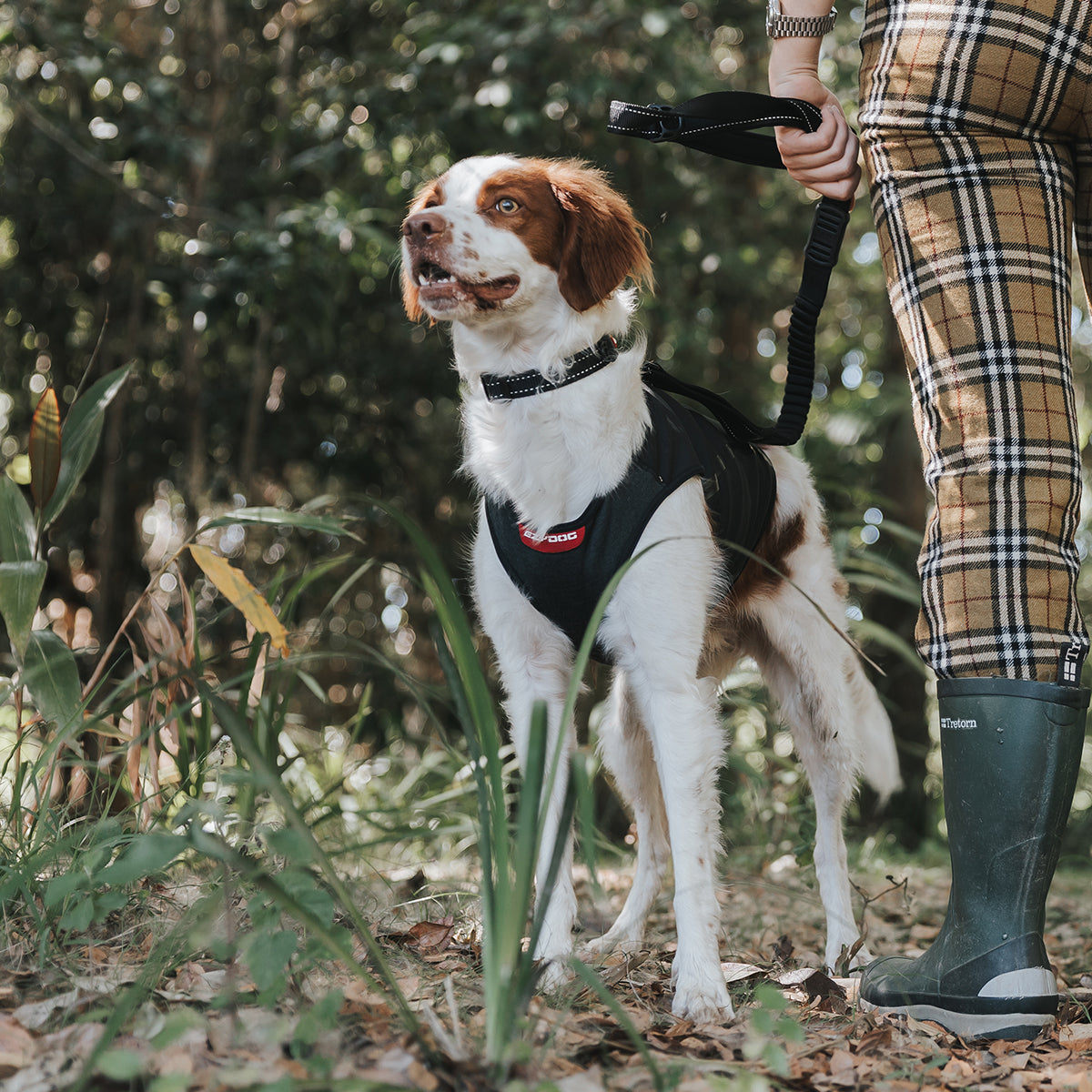
A reflective harness is the single most useful piece of visibility gear, because it sits high on the body where headlights catch it and it stays put while your dog moves. The X-Link Harness is a strong winter choice, with reflective trim and a padded, supportive fit that gives you comfortable control on dark walks, and the Express Harness also carries reflective detailing in a lightweight, easy-on design. Both put visible material across the chest and back where it does the most good. You can compare the full range in the dog harnesses collection and look for the reflective trim on the winter-ready options.
Reflective leashes
A reflective leash extends your visible footprint out to the full length of the lead, which matters because it marks the space between you and your dog, exactly the area a driver or cyclist needs to see. The Zero Shock Leash combines reflective stitching with a shock-absorbing section that softens sudden lunges, useful on dark walks when your dog reacts to something you have not spotted yet. For hands-free walking or running, the Road Runner Leash is worn around the waist and also features reflective detailing. Browse the dog leashes range to pair a reflective lead with your harness.
Reflective and high-visibility coats
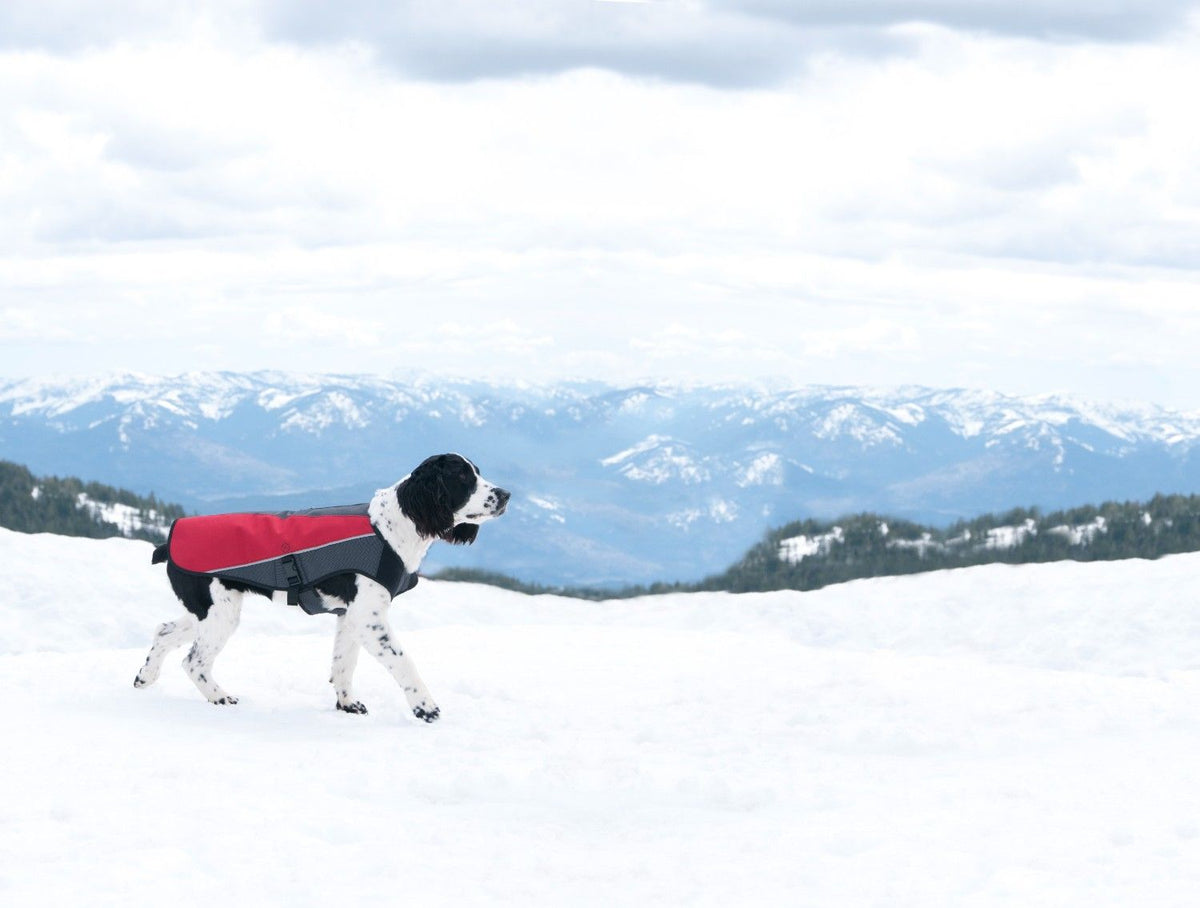
If your dog wears a coat through winter, choosing one with reflective trim means a single item keeps them both warm and visible. The Thermax Vest pairs an insulating layer with reflective detailing, so it works for warmth and for being seen at the same time. If you are still deciding whether your dog needs a coat at all, our guide on whether dogs need a coat in winter walks through which dogs feel the cold most.
Add an active light for the darkest walks
Reflective gear needs a light source to work, so on unlit paths or in heavy fog it helps to add something that gives off its own light. A small clip-on LED light attached to the harness or collar, in a steady or flashing mode, makes your dog visible even where there are no headlights to reflect, and a light for yourself does the same for you. Reflective gear and an active light together cover both situations, the lit road and the pitch-dark field, so your dog is seen whatever the walk.
Do not forget your own visibility
It is easy to focus on the dog and forget that you are just as hard to see. A high-visibility or reflective jacket, an armband or a clip light on your own coat makes the pair of you far more obvious to drivers, and since you are usually the taller of the two, being seen yourself often means being seen first. Treating visibility as something for both of you, not just the dog, is a small change that adds up on every dark walk.
Habits that keep you both safer
Gear does a lot, but a few simple habits do the rest. Stick to well-lit paths and pavements where you can, and save unlit routes for daylight. Where there is no pavement, walk facing oncoming traffic so you can see and react to cars. Keep your dog on a leash and close to you near roads in the dark, since even a reliable dog is harder to manage when neither of you can see well. And plan your route around the light where you can, choosing the brighter, busier way over a shortcut through an unlit area. None of these cost anything, and together they make dark walks noticeably safer.
Make sure the gear fits and is worn right
Reflective gear only works if it is on the dog and sitting correctly. A harness that is twisted, too loose or slipping to one side hides some of its reflective material and is less secure, so check the fit against the size guide and make sure the trim sits where headlights will catch it. It is also worth keeping reflective surfaces reasonably clean, since a thick layer of winter mud dulls how well they bounce light back.
Common mistakes to avoid
A few easy missteps undercut all the effort. Relying on a light-coloured coat alone is the most common, when pale fabric does little once it is genuinely dark and reflective trim does much more. Using reflective gear without any active light on truly unlit routes leaves a gap, since there are no headlights to reflect. Forgetting your own visibility is another, when a driver who sees you sooner sees your dog sooner too. And letting a dark, muddy harness stay caked over winter quietly reduces how well it works. Sidestep those and your gear pulls its full weight.
The bottom line
Dark winter walks are unavoidable for most of us, but being hard to see is not. Put your dog in a reflective harness and leash, choose a coat with reflective trim if they wear one, add a clip-on light for unlit routes, and make yourself visible too, then back it up with well-lit routes and sensible road habits. When you are ready to kit out for the season, the winter essentials range brings together reflective walking gear and cold-weather comfort, and you can find more visibility options in the safety collection.


Read more

Leave a comment
This site is protected by hCaptcha and the hCaptcha Privacy Policy and Terms of Service apply.