
Do Dogs Need a Coat in Winter?
It is one of the most common questions owners ask when the temperature drops: does my dog actually need a coat, or is their own fur enough? The honest answer is that it depends on the dog, and this guide walks through which dogs feel the cold most, how to tell when yours is chilly, and how to choose a coat that keeps them warm without getting in the way.
Do all dogs need a coat?
No, and it helps to say that plainly. Some dogs are built for the cold and cope happily without any extra layer, while others feel it quickly and are far more comfortable in a coat. Whether your dog needs one comes down to their breed and coat type, their size and age, their body condition, and the conditions you actually walk in. A dry ten-minute stroll on a crisp morning is very different from a long, wet walk in a biting wind, and the same dog might need a coat for one and not the other. Rather than following a blanket rule, it is worth understanding where your own dog sits.
Which dogs feel the cold most?
A few groups tend to need the extra warmth. Short-haired and single-coated breeds, from greyhounds and whippets to boxers and staffies, have little natural insulation and lose heat fast. Small and toy breeds have a large surface area for their body size, so they cool down quickly, and they also sit closer to cold, wet ground. Puppies have not yet developed a full adult coat or a mature ability to regulate their temperature. Senior dogs and those with health conditions often feel the cold more and take longer to warm back up, and stiff joints tend to be less comfortable in the cold. Lean, low-body-fat breeds have less natural insulation to fall back on. If your dog fits one or more of these groups, a coat is usually a kindness rather than a luxury.
Which dogs usually manage without one?
On the other side, thick double-coated breeds are built for cold weather and often do not need a coat at all. Huskies, malamutes, Newfoundlands, Bernese mountain dogs and many spitz-type breeds carry a dense undercoat that traps warmth naturally, and piling a coat on top can sometimes be unnecessary or even too warm. Healthy, active adult dogs of these types usually tell you they are fine by being keen to keep moving and showing no signs of discomfort. As always, watch the individual dog rather than the label, since age, health and how acclimatised they are all play a part.
How cold is too cold?
There is no single cut-off that fits every dog, but a rough guide helps. Most dogs are comfortable down to around 7C. Below that, cold-sensitive dogs start to feel it and benefit from a coat. As you approach and drop below freezing, most dogs other than the hardy double-coated breeds are more comfortable with a layer, and walks are best kept shorter. Wind and rain make a big difference, since a wet coat loses much of its insulating power and wind strips warmth away quickly, so a damp, blustery 5C can feel far harsher than a dry, still 0C. Treat these as starting points and let your dog's behaviour fill in the rest.
Signs your dog is feeling the cold
Your dog will often tell you they are cold if you know what to look for. Shivering or trembling is the clearest signal. Others include a reluctance to carry on, slowing down or trying to turn back towards home, lifting or favouring their paws off cold ground, a tucked tail and hunched posture, and whining or seeming anxious to get moving. If you notice these, it is time to head back and warm your dog up, and a coat on the next walk will usually help prevent them.
What to look for in a winter coat
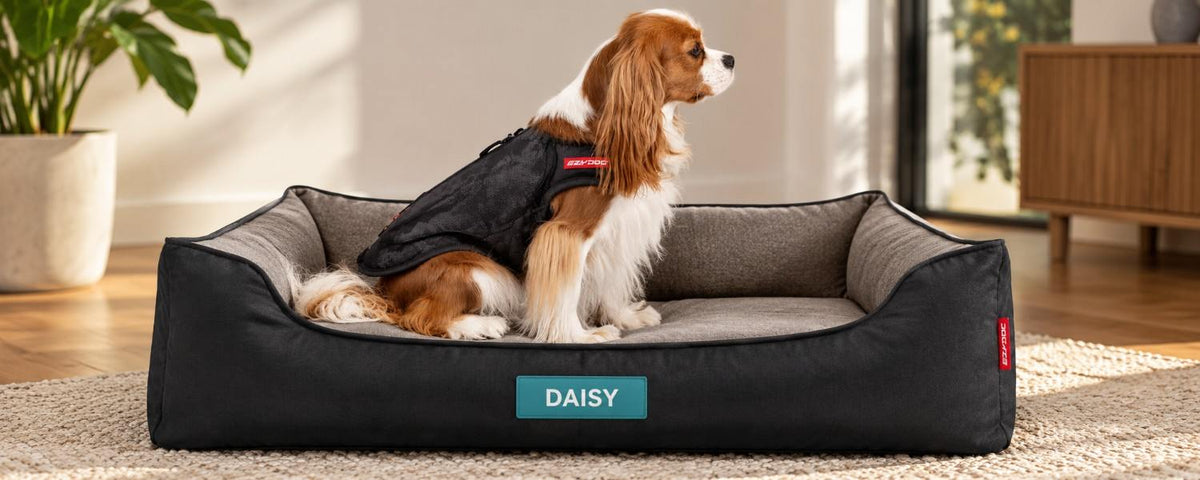
A good winter coat does a few things well. Warmth comes first, so look for genuine insulation rather than a thin, decorative layer. Coverage matters too, and a coat that protects the chest and belly, where dogs lose a lot of heat, does more than one that only sits on the back. Water resistance keeps the warmth working on wet winter walks, since a soaked coat stops insulating. A secure, adjustable fit keeps the coat in place and comfortable while your dog moves freely. And reflective detailing earns its place on dark winter mornings and evenings, helping your dog be seen. The Thermax Vest is built around these points, with a warm, insulating layer designed to keep active dogs comfortable through the cold months, and you can see the full range of winter dog coats to compare styles.
Getting the fit right
A coat only keeps your dog warm if it fits properly. One that is too loose lets cold air and rain in and can shift out of place, while one that is too tight restricts movement and rubs. Measure your dog's back length from the base of the neck to the base of the tail, along with the chest girth and neck, and check those figures against the size guide on the product page rather than guessing. The coat should sit snugly without limiting the shoulders or legs, and your dog should be able to walk, sit and stretch comfortably while wearing it.
Layering with a harness for winter walks
Many owners walk on a harness through winter, and the two work well together. A coat with reflective trim plus a reflective harness makes your dog far easier to see when the clocks have gone back and walks happen in the dark. A padded, reflective option such as the X-Link Harness gives you comfortable control and adds to your dog's visibility, and it fits comfortably over or under a winter layer depending on the design. Keeping your dog both warm and seen is what winter walking gear is really about.
Common mistakes to avoid
A few easy missteps are worth sidestepping. Putting a coat on a dog that does not need one, such as a healthy husky on a mild day, can leave them too warm rather than helping. Leaving a wet coat on after a walk keeps a cold, damp layer against your dog, so take it off and dry it. Choosing a coat by looks alone rather than warmth, coverage and fit means it may not do its job when the weather turns. And forgetting visibility on dark walks is a missed opportunity, when reflective detailing costs nothing extra to prioritise.
The bottom line
So, do dogs need a coat in winter? Some do and some do not. Short-haired, small, young, senior and lean dogs usually feel the cold and are more comfortable with a warm, well-fitting coat, while thick double-coated breeds often manage without one. Watch your own dog for the signs, judge the conditions on the day, and choose a coat that is warm, covers the chest and belly, fits well and helps your dog be seen. When you are ready to get them kitted out for the cold, explore the winter essentials range for coats, reflective walking gear and cosy extras built for the season.
Featured Products
Add us as a preferred source on Google »


Read more
Leave a comment
This site is protected by hCaptcha and the hCaptcha Privacy Policy and Terms of Service apply.