
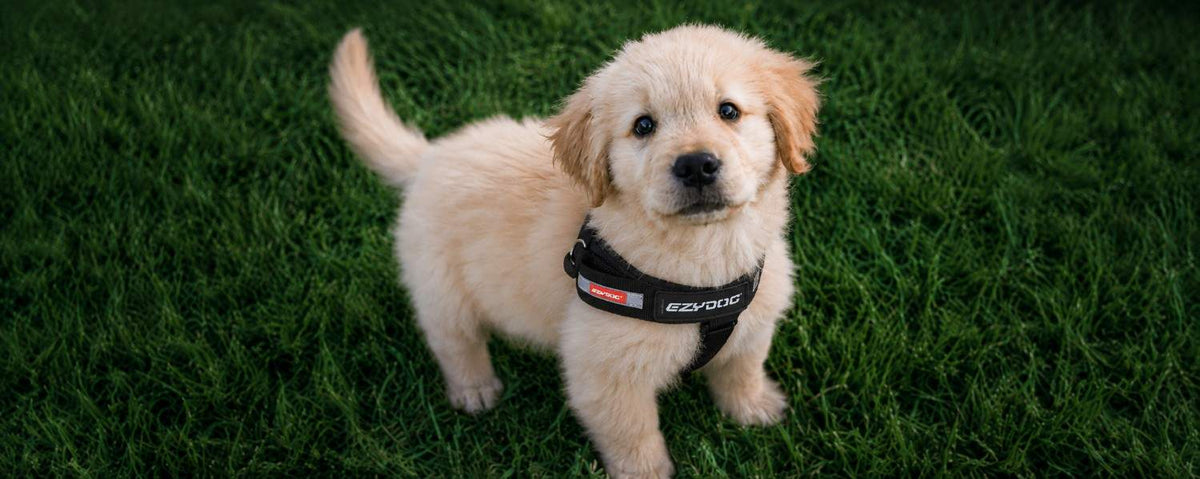
How to Choose the Right Gear for Your Puppy
Bringing home a puppy comes with a shopping list and a surprising amount of conflicting advice about what actually matters. This guide breaks down how to choose a harness, collar and leash that fit well now and keep working as your puppy grows, so you can buy once and buy right.
The one thing that matters most: fit
With a puppy, fit comes before brand, colour or features. Puppies grow quickly, and gear that fits beautifully today can feel tight within a few weeks, so the goal is simple: choose gear that fits correctly now and can adjust as your puppy grows. That single principle rules out anything with only one fixed size setting and points you towards pieces that adjust in more than one place. Get the fit right and everything else, from comfort to control, follows naturally.
Harness or collar? The first real decision
Before you compare specific products, it helps to understand what a harness and a collar each do for a young puppy. For walks and early leash training, a harness is usually the better choice. It spreads pressure across the chest rather than the throat, which is gentler on a puppy who is still learning that pulling gets them nowhere, and it gives you more control over a wriggly pup than a collar can.
A collar still has an important job, but at this age it is mainly a place to carry an ID tag rather than the main point of control on a walk. Most owners use both together, walking on a harness and keeping a lightweight collar on for identification. If you only take one thing from this section, let it be that a harness and a collar are partners, not rivals, and that for early walks the harness does the heavy lifting.
How to choose a harness
A good puppy harness does one thing above all: it fits well now and keeps fitting as your puppy grows. When you compare options, look for a few specific things.
Adjustability comes first. Straps that adjust in more than one place give you room to size up as your puppy grows, which saves buying a new harness every month. Next, look at how it goes on. Puppies rarely stand still, so a harness your puppy steps into or that fastens with a side buckle is far easier to manage than one that has to go over the head, which many pups dislike. Then check comfort against the body, meaning padding or a shaped chest panel and smooth edges so nothing digs in or rubs on a walk. Finally, consider visibility, since reflective trim or stitching is a small feature that matters a lot on early-morning or evening walks.
For a very small or young puppy, the FORMFIT Mesh Harness is light and breathable with a simple, secure fit. For a pup you expect to grow into a medium or larger dog, the Chest Plate Harness has a moulded chest panel that shapes to your dog over time and steps on rather than going over the head. If your puppy is already a determined puller or you want a harness that supports focused training, the Crosscheck Harness adds multiple attachment points and extra control. Those are examples of designs that tick the boxes above, but the features are what to look for in any harness. Compare styles across the full dog harnesses range and check each against the size guide before you decide.
How to choose a collar
At this age a collar is mostly for identification, so the choice is more about fit and material than features. Pick an adjustable collar, because a puppy's neck thickens quickly and you will need to resize it often. A soft, comfortable material matters too, since the collar stays on most of the time. Use the two-finger rule to judge the fit: you should be able to slide two fingers comfortably between the collar and the neck, and if you cannot, it needs loosening.
Because many owners walk on a harness and keep the collar purely for the tag, a simple, well-made everyday collar is usually all a puppy needs. The Neo Classic collar is one straightforward option, and you can compare it with the rest of the range in the dog collars collection.
How to choose a leash
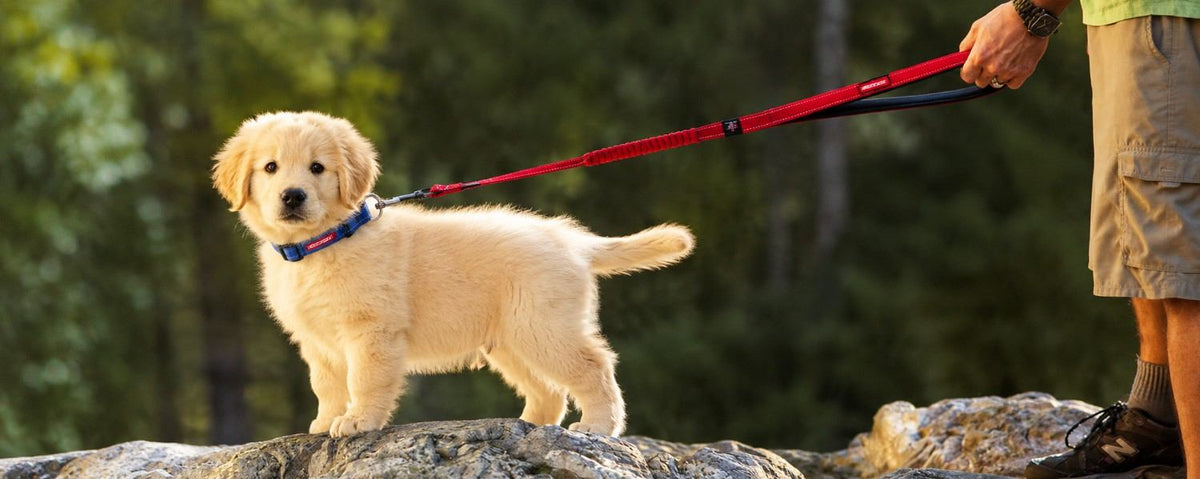
A puppy leash should be light and comfortable to hold. A thick, heavy leash made for a large adult dog is more than a small pup needs and feels clumsy in your hand. Aim for something lightweight with a secure clip and a comfortable handle, and think about how much give you want in the material.
A little shock absorption is worth considering, because puppies lunge suddenly at anything interesting and a leash that softens that jolt is kinder on both of you. The Zero Shock Leash is built around exactly that, with a section that takes the snap out of a sudden pull. If you would rather have adjustable length so one leash works for training and everyday walks, the Vario 4 Multi-Function Leash converts between several configurations. Length is largely down to preference, though a standard length gives enough control for early walks without being unwieldy. Browse the dog leashes range to match the leash to your puppy's size.
How to measure and fit gear on a growing puppy
Getting the fit right is worth a few extra minutes. To size a harness, use a soft tape measure to find your puppy's girth, which is the widest part of the chest just behind the front legs, and match that measurement to the size guide on the product page rather than guessing by breed, since puppies of the same breed can vary a lot.
Once it is on, a harness should sit snugly without digging in, and you should be able to slip two fingers under any strap. If it leaves marks or your puppy seems restricted, loosen it, and if it slides around or your puppy can back out of it, tighten it. Use the same two-finger check on the collar, and make sure the leash's clip and handle stay comfortable in your hand. Then recheck everything every couple of weeks while your puppy is growing fastest, because a fit that was perfect last month can quietly become too tight.
Matching the gear to your puppy
The right choice also depends a little on the dog your puppy is becoming. A tiny or toy-breed pup is best served by the lightest, softest options, where bulk and weight would only get in the way. A puppy heading towards a large or strong adult size benefits from gear with more adjustment range and sturdier construction, so it keeps up as they grow rather than being replaced. And a pup that already pulls hard is easier to guide on a harness designed with training in mind than on a collar. If you are not sure where your puppy will land, adjustable gear with a generous size range is the safest bet, since it grows with them and covers more of the in-between stages.
Common mistakes to avoid
A few simple slip-ups catch out plenty of new owners. The first is buying for today's size only, when adjustable gear will serve you far longer than something that fits for a fortnight. The second is relying on a collar alone for a puller, when a puppy still learning leash manners is usually easier to guide on a harness. The third is choosing a leash built for a big adult dog, which is heavier than a small puppy needs and more awkward in your hand. Avoid those three and you have made the decisions that matter most.
Putting it all together
Choosing your puppy's first gear does not need to be complicated. Start with a well-fitted, adjustable harness, add a lightweight collar for the ID tag, and pair it with a leash that is easy to handle, then check the fit regularly as they grow. If you would like a simple shopping list to work from, our puppy essentials checklist sets out everything a new puppy needs. And when you are ready to choose, the puppy accessories collection brings together adjustable gear designed to grow with your dog.


Read more
Leave a comment
This site is protected by hCaptcha and the hCaptcha Privacy Policy and Terms of Service apply.